
Flood & sewage testing · Spokane
Flood & Sewage Testing
After a flood or sewage backup, a room can look dry and clean while contamination remains. SafeNest provides independent inspection and testing to help document the affected areas and evaluate the result of cleanup.
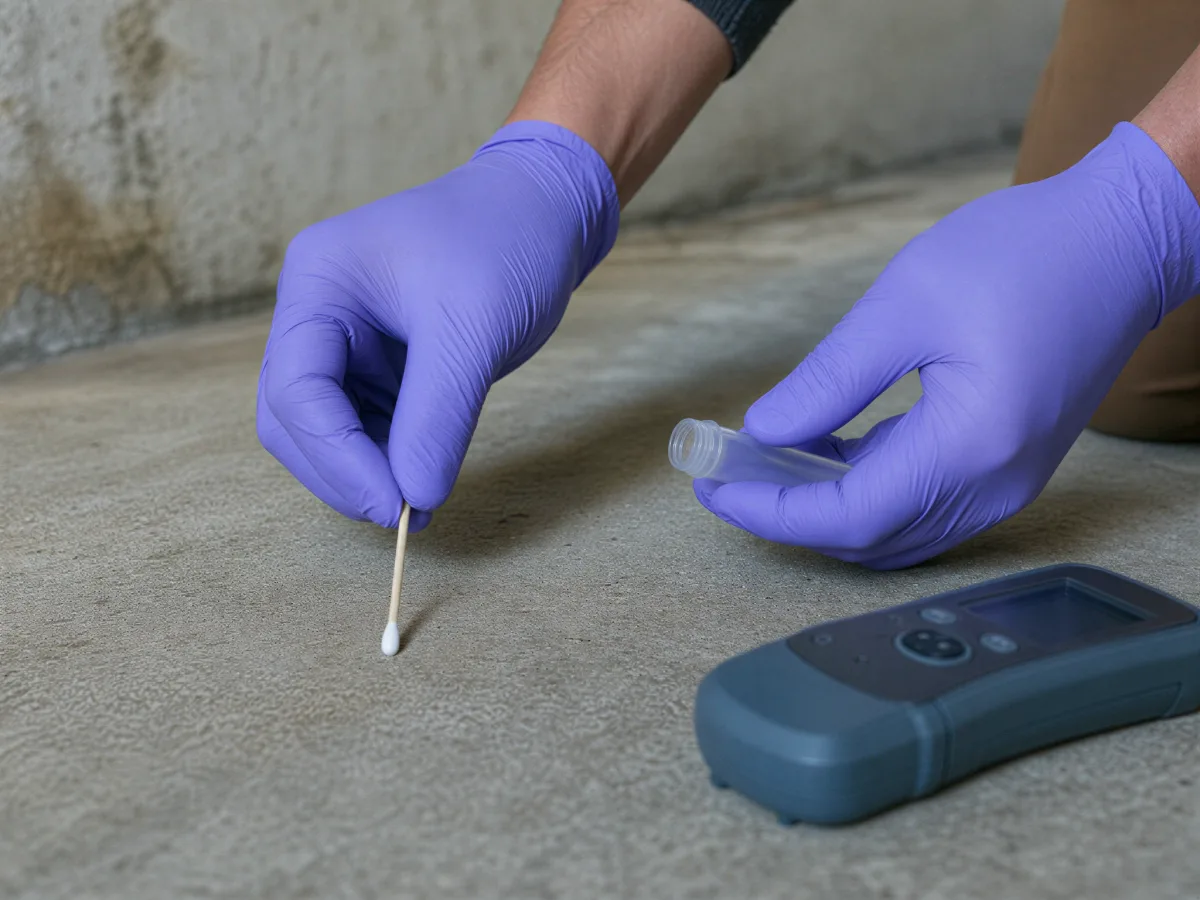
After water damage
Drying and decontamination answer different questions.
Removing the water does not, by itself, show that the affected surfaces are clean. The source of the water, the materials it reached, and the work completed afterward all matter.
A sewage backup raises different concerns from a leak that began with clean water. Floodwater from an unknown source also needs a careful review of what entered the space. We start with that history before deciding which observations, moisture measurements, or contamination samples will be useful.
SafeNest does not provide emergency drying or cleanup. Once immediate hazards are under control, we can discuss an inspection before the work or a check of the completed cleanup. The scope depends on what happened and what you need the findings to answer.
What should I do after a sewage backup?
Use a qualified contractor for the cleanup.
A water-damage professional can address drying and decontamination. Attempting that work yourself can spread contamination beyond the area that the water originally affected.
It is easy to judge progress by what you can see: the standing water disappears, the floor dries, and the room looks normal again. That is useful progress, but appearance cannot establish whether cleaning removed fecal contamination. Our inspections sometimes find contamination in rooms that look dry and clean.
Keeping the roles separate gives you an independent check. The contractor performs the drying and cleaning; SafeNest assesses the agreed areas and reports the findings. We do not sell the cleanup, so our assessment is not a proposal for more contracting work from our own company.
If you contact us before cleanup, we can discuss documenting the initial conditions. If the work is already complete, share the contractor's scope, photos, drying records, and any earlier test results. These records help us understand what changed and which questions remain.
An independent check of the work
Look beyond a clean surface.
Post-cleanup testing is often called clearance testing. Its purpose is to document the conditions in the defined work area after the contractor finishes, not to approve the entire property from a single sample.
We review the water source and the areas affected, then consider the observations and samples that fit the project. Moisture readings address remaining wetness. Contamination samples answer a different question about the material collected from the sampled surfaces. One is not a substitute for the other.
When the findings show that an agreed area needs more attention, the report identifies that concern for discussion with the cleanup contractor. Further cleaning and a repeat assessment may be appropriate. This gives you a documented reason for the next step, rather than asking you to settle the question by appearance alone.
The report also makes clear where the inspection or sampling stopped. Results apply to the selected methods, locations, and time. They help inform decisions about the work and use of the space, but do not prove that every possible contaminant is absent.
What sewage can leave behind
Why testing uses indicator organisms.
Sewage and contaminated floodwater can carry many different organisms. Which ones may be present depends on the source of the water and the circumstances of the event.
Examples include disease-causing strains of E. coli, Salmonella, Shigella, and Giardia. Hepatitis A virus can also occur in sewage. The water source helps determine which hazards the investigation needs to consider.
Testing directly for every possible pathogen is impractical for a typical clearance assessment. We use selected indicator organisms because laboratories can measure them more readily than a full panel of pathogens. Finding indicators associated with fecal contamination can signal that contamination remains in the sampled area after cleanup. Coliform bacteria and Bacteroides are among the groups discussed in sewage investigations; the actual panel depends on the project and laboratory method.
An indicator result is evidence about the organisms and locations included in that test. A negative result for an indicator does not rule out every virus, parasite, or other pathogen. We explain that distinction so you know what the findings support and do not mistake a limited test for a guarantee about the entire building.
When moisture also raises a mold question
Consider what stayed wet.
A contaminated-water event can create more than one problem. The cleaning may address surface contamination while wet materials still need attention.
If materials remained wet for several days, drying was incomplete, or a musty odor or suspected growth remains, a mold assessment may also be useful. We consider the extent of the damage and the drying history rather than adding mold sampling automatically to every sewage project.
Tell us about earlier leaks, inaccessible spaces, or areas that still seem damp. That information helps us decide whether the investigation should include a separate moisture or mold question. Read about SafeNest's mold inspections.
What you receive
A record of the conditions and the next questions.
The findings should help you understand the cleanup, not leave you to interpret a laboratory report on your own.
We document the agreed areas, the water and cleanup history available to us, relevant moisture readings, and any samples collected. The report connects each laboratory finding to its sample location and method. We distinguish what we observed from what a result can establish.
You receive an explanation of the findings, the limits of the assessment, and matters that need further attention. That record can support a conversation with your contractor about additional cleaning, access to an unresolved area, or a repeat check. The next step follows the evidence instead of a blanket assumption that the room is either entirely clear or entirely contaminated.
Questions about flood and sewage testing
Common questions.
What should I do after a sewage backup?
Stay out of areas with immediate hazards and use a qualified water-damage contractor for drying and decontamination. Attempting cleanup yourself can spread contamination. SafeNest's role is independent inspection and testing, including a check of the agreed areas after the contractor completes the work.
When should I call SafeNest?
Address the source and immediate hazards with the appropriate professionals first. Once the area can be assessed, call to discuss what happened and whether cleanup is planned or complete. We can discuss documenting the initial conditions or evaluating the completed work, depending on the project.
Should cleanup happen before testing?
It depends on the question. An initial assessment can document conditions before cleanup, while post-cleanup testing checks selected areas after the work. Share the contractor's scope and timing so we can discuss which assessment is useful rather than delaying urgent cleanup for an unnecessary test.
What pathogens can occur in sewage?
Sewage can carry disease-causing bacteria, viruses, and parasites. The water source and event history guide the investigation. The sewage-testing section explains examples of those organisms and why clearance assessments usually use selected indicators.
What does sewage clearance testing measure?
It generally measures selected indicator organisms using the laboratory method chosen for the project. Detecting fecal-associated indicators can point to contamination that remains after cleanup and help identify areas for further attention.
Can a clean-looking surface still have contamination?
Yes. A surface can look dry and ordinary while contamination remains. Independent inspection and sampling give you evidence to discuss with the cleanup contractor rather than relying on appearance alone.
Can flooding create a mold concern?
Yes. Wet materials can support mold growth, especially where drying is delayed or moisture remains hidden. Depending on the damage, odors, and drying history, SafeNest may recommend a mold assessment as a separate part of the investigation. It is not automatically necessary for every event.
What records should I provide?
Share photos, the source and timing of the water event, and the contractor's cleanup scope. Drying logs, earlier laboratory results, and notes about repairs are useful too. Tell us which rooms remain a concern so the assessment addresses the questions that are still unresolved.
Request testing after water damage.
Tell us where the water came from, which areas it reached, and what cleanup is complete. We will discuss the questions an independent assessment can answer.