Property history and a visual inspection
We begin with what you know about the building: past leaks, repairs, odors, visible changes, and previous cleanup. Then we inspect the agreed areas for water damage, suspected growth, and conditions that support mold. This work guides the investigation rather than treating every room as a place to collect another sample.
A sampling-only visit can leave the most important questions unanswered. A laboratory report may identify mold types, but you still need to understand the moisture problem and what to correct. We look for that explanation before we choose the tests.
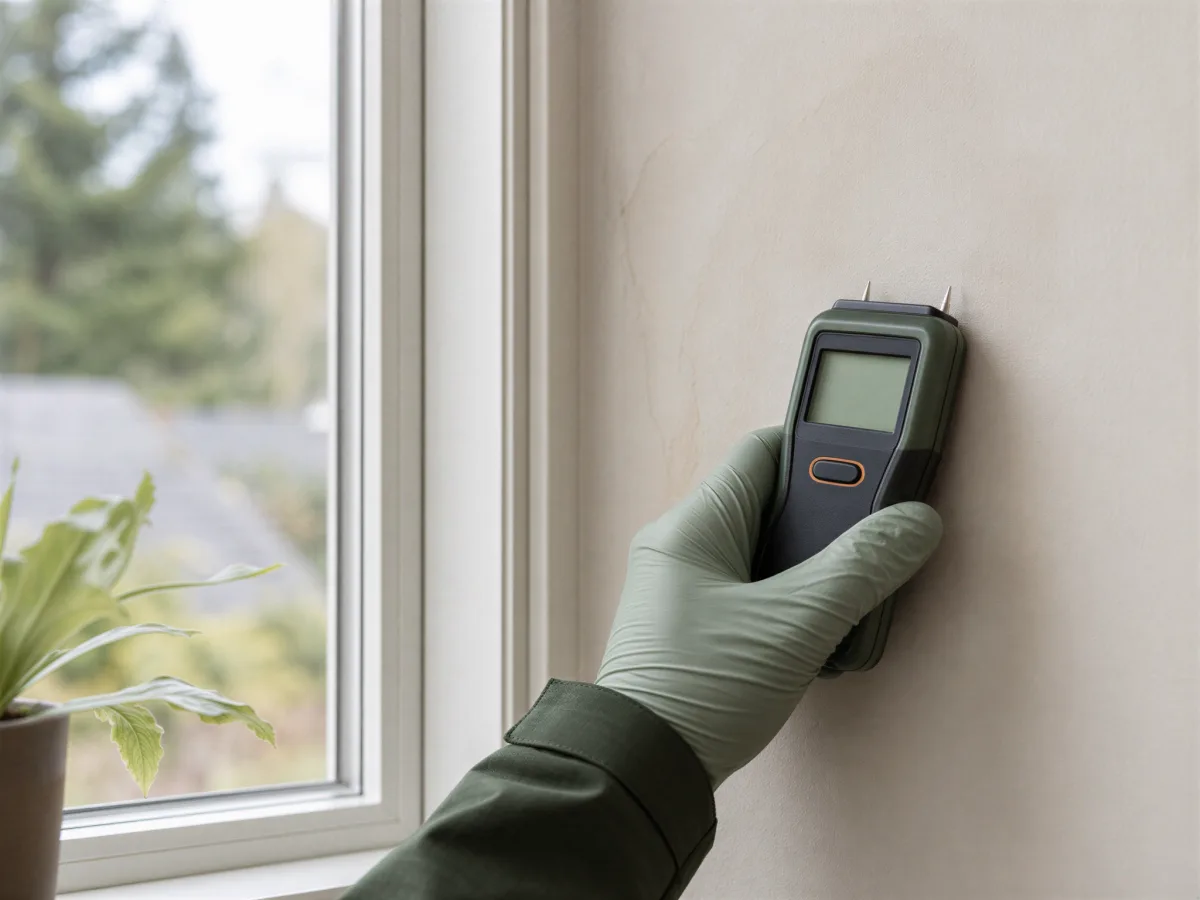
Thermal imaging, moisture meters, and humidity
An infrared camera helps us scan for temperature patterns that may point to hidden moisture behind an ordinary-looking wall or ceiling. The camera does not see mold, and a temperature difference is not proof of a leak. We follow up on questionable areas with moisture-meter readings to check the materials directly.
Humidity readings add context about conditions in the space. We consider them alongside the material readings and the building history, rather than treating one room-air reading as proof that everything is dry. Finding the moisture source matters because removing growth without correcting that source can leave the conditions for it to return.
A closer look at hidden areas
Some concerns lead behind walls, beneath carpeting, or into ductwork. Where access allows, a borescope can help us examine a space that a normal visual inspection cannot reach. Wall-cavity air sampling may also fit a defined question. We explain access limits and distinguish the areas we checked from those we could not evaluate.
Samples chosen for a reason
A surface sample can help identify suspected growth on a particular material. Air sampling collects spores for laboratory examination, while bulk sampling examines a piece of material. Tape lifts, swabs, and wall-cavity samples each answer different questions. The inspection findings determine which approach is useful and where to collect the samples.
Some projects call for a more specialized method, such as microbial volatile organic compound (mVOC), mycotoxin, or settled-dust sampling. Surface screening such as ATP testing may also provide supporting information about biological residue, but it does not identify mold or replace laboratory analysis. We discuss the purpose and limits of a method before including it.
Your budget is part of the plan. The goal is to collect samples that help resolve the concern, not to give every property the same package. Some projects need several methods; others need a narrower investigation or no laboratory sampling at all.